

*( Welcome )*
Tyler's gyaruo archive
Recommended for 18+. There will be adult references and gravure.
All scans are of magazines that are at least 10 years out of print (2000-2015) and uploaded for historical preservation.
If you enjoy my scans please consider supporting legitimate sales channels like SUNKISS to keep physical copies in circulation.
Sales directly contribute to our mutual aid fund and give me more time to dedicate to the archive.
* Latest Updates *
:: 25/05/26 :: Added 12 new thumbnails.
:: 11/02/26 :: Added 29 new thumbnails.
* History *
This brief will cover mostly gyaruo's history in amekaji, veki and host rather than its yankii roots as this is my area of knowledge. But if you have any further info to share, get in touch. I guarantee this write-up has more authenticity than a random Tiktok reel pushed by the algorithm, although I'm still just an archivist at the end of the day. Everyone naturally brings their own biases to the table so take my perspective with a grain of salt. I always use Japanese sources where possible.
1990-1999
I often see western enthusiasts claim that gyaruo is a rebellion against male beauty standards in the same way as gyaru, but this is a huge oversimplification that begins with the misconception that gyaruo is just a male version of gyaru. I started asking myself the question, "Why did men start copying the looks of gals?" - it surely sprang from somewhere. There's a lot of misinformation, gatekeeping and vagueness out there, so let's dive into it and try to untangle some of the threads.
V-Boys

First we'll briefly explore a trend that is known as the proto-gyaruo blueprint.
Most people know gyaruo as a gyaru inspired yankii subculture. That much is true. The false idea is that gyaruo doesn't just stem from gyaru, but directly mirrors it. Gyaruo has its own unique cultural origins and elements, and it all started with a precursory look.

The style that originally kickstarted the gyaruo movement was 'v-boys'- boys who habitually wore v-neck tees, henleys or loosely-buttoned shirts to attract gyaru (kogals) and show off their tanned skin. But why v-necks? A big influence is said to be the TV drama Beach Boys, where the two main protagonists have long hair, tan, and wear v-necks and tank tops often. The show exploded in popularity during its original run (June 1997) and likely explains the consistent presence of surf and amekaji styles in every era of gyaruo fashion. The term v-boy was coined by Boys Rush magazine, and was a main feature in the publication's first issue in June 1998 - exactly one year after Beach Boys began airing.

Hosts
But later iterations of gyaruo have very different influences, like hosts and vkei, right? I know only a little bit about host culture in the 90s, and I'll certainly update this section if I find more information. But the simplest answer is that at this point, most of the hosts I found are referred to as gigolo and resemble Takuya Kimura in Long Vacation (1996) much more closely than that iconic sujimori and pointed shoes look we associate with hosts of the 2000s. He was the conventional heartthrob of that time.
Were many gyaruo hosts back then? I don't have a clear answer at the time of writing. But host culture has always been steepled in yakuza shenanigans, so it wouldn't surprise me.

Visual Kei
It may seem like an odd place to mention visual kei. At this time, it has very little relevance to gyaruo beyond the fact that Gackt used to work as a host, or that Raphael did a TV skit parodying the subculture. But this is the period that visual kei started laying down the foundations of that now iconic sujimori hairstyle. At this point the two scenes couldn't be more different, but later they'll merge in a way that couldn't be more logical.

It's important to make the distinction early on, and note that bandmen of this time were not really pioneering street fashion but riffing off it.
Gyaruo
In the late 90s, gyaru-o emerges proper, literally: "gal-men" or gal-boys. Early gyaruo wore colourful clothes, american casual, surf, street mode style.

A conflicting source cites Osaka Vivi-o (大阪vivi-o) as the origin of v-boys and gyaruo. It states that the original gyaruo began when colourful elements were added to v-boy style in Osaka. Gyaru came first, naturally. Then, v-boys started wearing colourful clothes, people referred to the as 'gyaru-otoko' because they more closely resembled gals. There's also information out there about the Shibuya Teamers and bosozoku aspect of gyaruo, but it's something I'm not personally invested in. You can also read about the general Japanese streetwear boom Shibukaji and Urahara fashion from other sources- Bape is too aesthetically painful for me to expend bandwidth on.
Like gyaru, they participate in parapara and its offshoot genres of dancing. The early culture revolves around the club scene, bosozoku and street racing.
Values
Next we'll address those ideas about gyaruo's values.
Let's start by asking the most important factor: Why gyaru is a rebellion against womens beauty standards. Because Japanese women are traditionally expected to conform to the yamato nadeshiko type. Since feudal times pale skin was associated with wealth, delicacy and femininity. These culturally ingrained stereotypes carry over into modern life. Women are still expected to be soft and yielding with pale skin. A good wife and homemaker. Gyaru were loud, sexually vulgar, impolite and tanned their skin to reflect the perceived western values of the black women they admired. There's a lot to unpack there, but it's the crux of why gyaru are fetishized and called, "bicchi" (slutty and brash).
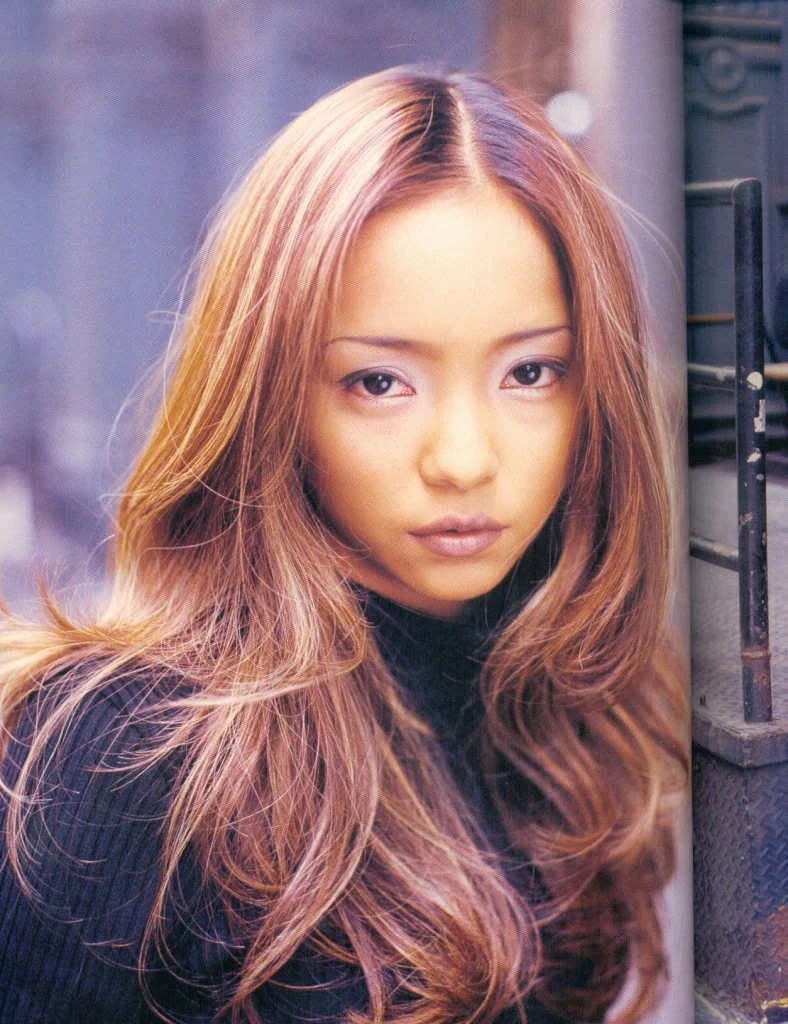
Now apply those ideas to men. Tanned skin on men was seen as an indicator of machismo, of being a player and a delinquent bad boy. Gyaruo is an exaggeration of masculine stereotypes, not a rebellion against them. The rebellion aspect of gyaruo is about being seen as rugged and hypermasculine, dangerous like a yankii and tanned like the working class.
Namie Amuro, an Okinawan native, directly challenged the beauty standard in Japan with her natural skintone when amuraa kei came around. The stars of Beach Boys on the other hand were seen as conforming to a masculine ideal. This isn't to say that gyaruo, hosts or bandmen didn't have a negative image in the public eye. They were seen as 'dame' (no good), just in a very different way.
It's important to remember the cultural differences at play. Especially with regards to the progressive values many people nowadays attach to gyaru culture. I'll touch on this further in the AV gyaruo section.

Men's Egg
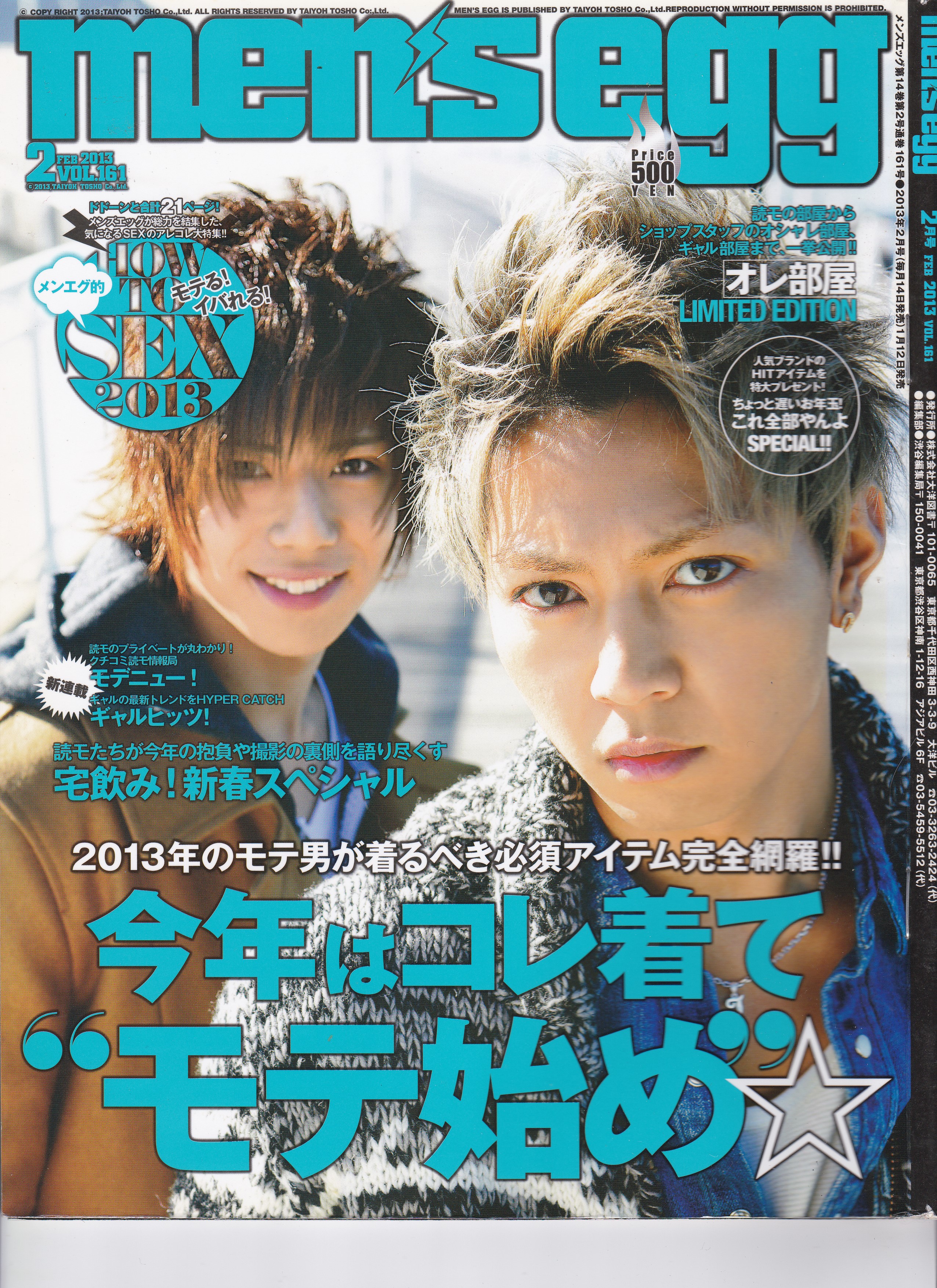
At the very tail end of the 90s, in 1999, the famous Men's Egg magazine begins publication. The models too look very different to what is now the classic gyaruo look. 'V-boys' gets adopted into 'E-boys', and thus begins the wider documentation of gyaruo. Men's Egg is the standard entry point for gyaruo overseas, and certainly was for me back in the 2000s. But within the first wave of og gyaruo, models in Men's Egg get a lot of flack for being flashy posers. This is still present today, coming from 'Japanese archive' followers for being a commercialized, fast fashion copy of authentic gyaruo culture. Men's eggmo are given the pejorative moniker, 'model gyaruo'.
But just because Men's Egg has massive cultural influence and nostalgia attached to it, doesn't mean it's above criticism.
As I touched on above, it's easy to project our own progressive ideas of counterculture onto others, especially on past eras, but don't be fooled by the skincare routines and glamorous nails. While Egg has a pretty questionable reputation at best, Men's Egg in particular features grossly homophobic jokes, rampant misogyny, and despite the sheer amount of questionable and even illegal content in there, they allegedy fired one of their models come editor in chief for starring in JGV movies.
An interesting note, as of September 1999 Men's Egg their editorial team had at least one gay man on the team- referred to as Moho Shotaro. A deeper read into the magazine may give more context into that.
2000-2005
Sentaa Guy
Sentaa Guy features as a trend in Men's Egg for the first time in October 2003. Probably the most flamboyant yet rare gyaruo style, but you can also find them in early issues of gal magazines like Ego System. As for Men's Egg, a regular article named 'Harosen' (Hello Sentaa Guy) begins. These guys wore wild make-up and women's clothes, imitating their manba girlfriends without shame despite the magazine poking fun at them for it. It's undoubtedly the most gender subversive gyaruo trend- but like all gyaruo styles, a lot of guys still did it to get laid.
It's a short-lived trend lasting just a year or two, and in November 2004, Men's Egg declares it over with a feature on graduating sentaa guy titled 'Goodbye Sentaa Guy' (Page 91). "From now on, I'm aiming for onii kei style!" the tagline announces. The page showcases before and after shots of sentaa guy who have toned down their look. I read that gyaruo graduate from Sentaa Guy at age 20, which checks out with my findings.

One of the reader models, Tomonyan, reflects on a fond memory of Alba Rosa shirts being tight fitted because of his muscles and states his reason for leaving sentaa guy is that ordinary people will look down on him. Horitake, another model, states his wife Abo-chan will continue to be manba. He reminisces on grooming his leg hair. Another guy, Yaataku, 'who pretends to be 19 when he's 20' states that he still loves sentaa guy style, and his chances of pulling women will decrease when he graduates. The general consensus is that graduating from sentaa guy is to keep up with shifting trends and step into adulthood. I also got a strong impression that the editor in chief of Men's Egg just find the style pretty stupid and is eager to usher in onii-kei as the next fashion wave. Naoki Umeda was allegedly a sentaa guy and got his start as a reader model in Men's Egg and was disappointed at having to move with the times.
There was some mild crossover with vkei in this time. Aikaryu (2000-2007) had at least one gyaru look, and Raphael members parodied gyaru on a TV appearance.
Onii Kei
Men's Knuckle
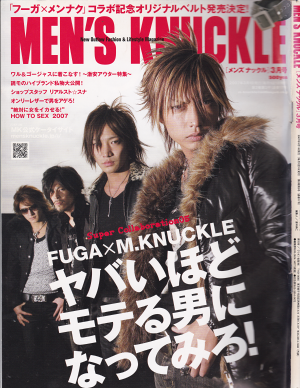
In late 2004, Men's Knuckle begins publication. Although known as a competitor to Men's Egg it is actually advertised in the last page of Men's Egg in October 2004, which coincides with the sudden push for onii-kei. Men's Knuckle is most known for its onii kei looks and coining the term datewaru. It famously features over the top, lame catchphrases and slogans that give Men's Knuckle its unique identity. This kind of titling will later be used in Men's Spider too.
2006-2009
This is the era where onii kei and host kei take the stage in a big way. Fedoras are trending worldwide, neo vkei is on the rise.

Host kei
As early a 2006, host clubs began forming their own jrock bands like Club Acqua's AcQuA-EP and Club Air's A.G.E.
Final Fantasy, too, follows suite with Final Fantasy XII Versus in 2007. The host kei inspired party of characters are donned in designs by Roen, and Square Enix character designer Tetsuya Nomura is a known fanboy of visual kei. The protagonist, Noctis, is a prince, a tongue-in-cheek reference to the 'Prince' host archetype. His environment is perfectly host-club esque, and his host signature pointed shoes only drive home the association.
Host Knuckle begins publishing in January 2008, but there are many other host magazines like Men's Yukai that are totally unrelated to gyaruo.
You can read about the rise of host clubs in an old CNN article from that time. One host, Yunosuke, remarks, "Women see us as one of their accessories. They like to wear nice things, so I try to look prettier for them all the time."

Johnny's
Johnny's Entertainment debuts KAT-TUN in March 2007 with REAL FACE, possibly the most immediately recognisable example of gyaruo styling in jpop I've seen. KAT-TUN release multiple gyaruo inspired PVs most notably in 2008, One Drop is released as a tie-in to Kame's new TV drama Kami no Shizuku, and LIPS- Japanese commentors on YouTube compare the members to Final Fantasy and Men's Knuckle, which one commentor said was at its peak when this PV was released.

The classic M-shaped bangs come into full force in 2008, with Naoki Umeda being a prominent example. Even jpop stars like Kazuya Kamenashi adopt the hairstyle and begin sporting onii kei + host kei inspired looks in mainstream media. As anyone who has been in a subculture long enough will know, this signifies the natural point where popularity explodes amongst the general population and your once underground scene officially begins to plateau as the original adopters drop out.

Another Johnny's boy group NEWS releases Koi no ABO in April 2009, cementing the gyaruo and host kei association in popular culture. In the PV they wore host kei brands like Diavlo.

AV Gyaruo
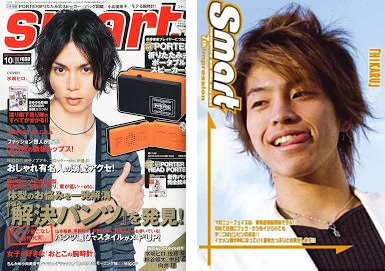
Johnny's Entertainment basically had a monopoly on jpop boy groups, to the point that the colliqual term for a twink in 2000s Japan became 'Johnnys'. If you wanted to search for adult content featuring AV gyaruo, one of the search terms you'd use was Johnny's kei. These guys had a fandom just like models and hosts, where fangirls wrote yaoi fanfiction about their favourites hooking up off-set, and would typically feature in very female-gaze 'JGV' adult movies. For the curious, popular publishers of AV gyaruo content included Coat West and Acceed.
Rokku
Yasu's solo project Acid Black Cherry debuts in 2007, and Hyde soon follows collaborating with Hide's ex-guitarist Kaz to form VAMPS in 2008. Yasu and Hyde both become faces of the jrock x gyaruo crossover as many gyaru are introduces to the bangya life. Many Bandmen are either hosts (the Raid) or customers of hostess clubs (Hyde), creating a natural ecosystem. Bands like Golden Bomber then parody this dynamic. Artists like Hyde are overly glazed by excitable fans in modern retrospectives, but it's clear that they didn't pioneer the style and merely adopted it after gyaruo attained enough widespread appeal to become a staple of the red light district.
A poll in Koakuma Ageha shows Daigo, YamaP (NEWS) and Jin Akanishi (KAT-TUN) are very popular with Agemo.

Men's Egg Drummers becomes a thing.
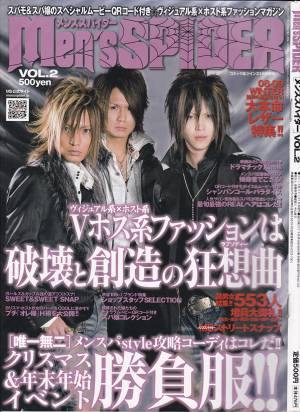
Men's Spider publishes its first issue in 2008 and immediately coins the v-host kei style (visual host). The convergence of host, vkei and gyaruo has begun.
By 2009, jrock is regularly mentioned in kyabajo magazine Koakuma Ageha.
2010-2015
As we enter the 2010s, fashion becomes more uniform generally. Gyarusa units like Black Diamond represent a death knell to the underground nature of the subculture and its turn into a profit churning machine. Sujimori gets bigger and more complex, harder to maintain and keep up with, and many original gals are now gyaru mamas or have retired.
There was a gyaruo character in Kamen Rider Fourze- JK played by Shion Tsuchiya in 2011-2012, although many characters had that popular Johnny's look throughout the 2000s.
Surf and amekaji continues to be popular, but now with those 2010s brights and plaid patterns.

V-Host Kei
Onii kei fashion is eclipsing by 2011, replaced in Men's Egg by 'mote kei'- the most toned down variation of gyaruo you can imagine. I don't think it would be remiss to say that v-host kei was taking the spotlight at this time.
By 2014, Men's Spider is now comprised of mostly straight visual kei content rather than gyaruo.
In 2014, Men's Egg ceases publication. Men's Spider follows suit in 2015, and Men's Knuckle too. Vkei loses its mainstream appeal to the rise of kpop, which is now the look that hosts migrate to. The bubble bursts and Heisei gyaruo is dead.
2020-
"Vkei"
During the early 2020s, the tiktok trend of Japanese archive, falsely attributed as Kmrii, emerges alongside a revival of gyaruo led by popular gyaruo like Hideomi (now retired). Both in Japan and internationally, there becomes a widespread misconception that the style is called vkei. Comment sections of guys cosplaying Hyde's wardrobe are littered with the same bot-like accreditions: Death Note, Final Fantasy, and so on. Because the authenticity of the movement has been gutted from the dress style and taken over by trend hoppers who just want to be niche, the scene is quickly taken over by people who wear brands favoured by bandmen, claim to dress vkei, and have never having listened to visual kei music or participated in a single aspect of gyaruo culture.
Heisei Retro
Reiwa
Men's Egg returns in October 2025 with its first issue in a decade. "Gyaruo is back!" the front cover declares. But the cover models look nothing like what we've seen before. And with Heisei retro being the current boom, it's hard not to find Reiwa gyaruo dull and uninspired at best, or at worst tone deaf to the trends of gen-z.
(c) all rights reserved